


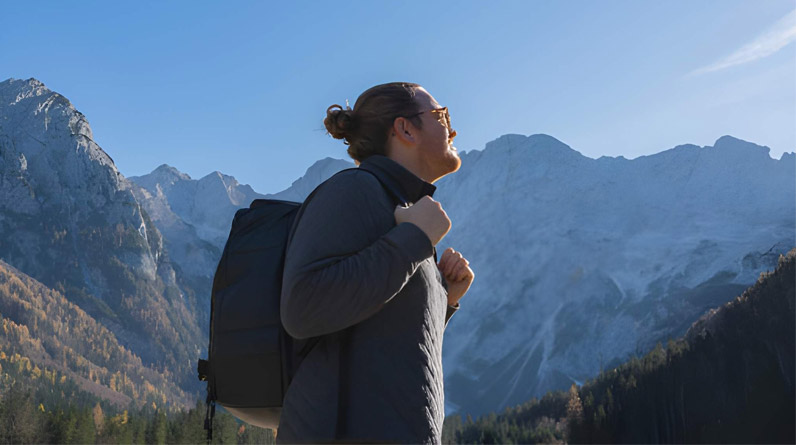
Picture this: You’re standing in a bustling market in Marrakech, negotiating prices in broken French, or perhaps you’re hiking through the misty mountains of Peru, sharing stories with strangers who feel like old friends. In these moments, something profound happens. The world stops being a collection of names on a map and becomes a living, breathing reality that challenges everything you thought you knew.
Travel doesn’t just take you to new places—it fundamentally rewires how you see the world and your place in it. Whether you’re backpacking across continents or exploring a neighboring state, stepping outside your familiar bubble creates a ripple effect that touches every aspect of your life. Let’s explore exactly how this transformation happens and why it matters more than ever.
The Science Behind Why Travel Transforms Us
Before diving into the specific ways travel changes your perspective, it’s worth understanding the psychological mechanism at play. When you travel, your brain enters what neuroscientists call a “state of cognitive flexibility.” You’re forced to process new information, adapt to unfamiliar situations, and question assumptions you’ve held for years.
Research shows that experiencing different cultures activates neural pathways associated with creativity and problem-solving. You’re essentially giving your brain a workout that strengthens its ability to think outside the box. This isn’t just feel-good philosophy—it’s backed by neuroscience.
Related: The Evolution of Travel in 2025
Breaking Down Cultural Barriers You Didn’t Know Existed
One of the most immediate shifts you’ll experience is the dismantling of cultural stereotypes and preconceptions. We all carry invisible assumptions about how life “should” be lived, shaped by our upbringing and environment. Travel exposes these assumptions for what they are—just one way of doing things among countless others.
The Mirror Effect of Cultural Immersion
When you witness how people in Thailand greet each other with a respectful “wai,” or observe how Italians prioritize three-hour lunch breaks with family, you start questioning your own cultural norms. Why do Americans eat lunch at their desks? Is faster always better? These questions create a mirror that reflects your own culture back to you with fresh eyes.
Here’s what typically happens during cultural immersion:
- Initial shock: Everything feels strange and uncomfortable
- Adaptation period: You begin understanding the logic behind different customs
- Appreciation phase: You recognize value in approaches different from your own
- Integration: You adopt certain practices that resonate with you
Real Example: The Pace of Life Revelation
Consider someone from New York City visiting a small village in the south of Spain. In New York, efficiency and speed are virtues. Every minute counts. But in rural Spain, people might spend an hour at a café, greeting neighbors, discussing the weather, simply existing in the moment. Initially frustrating, this slower pace eventually reveals something profound: productivity isn’t the only measure of a life well-lived. Relationships and presence matter too.
From Material Wealth to Experiential Richness
Perhaps one of the most documented shifts in perspective involves how travelers view material possessions versus experiences. A 2019 study by Momentum Worldwide found that 76% of consumers now prioritize spending on experiences over material goods—a trend largely driven by younger generations who’ve embraced travel as a lifestyle.
The Lightness of Living With Less
There’s something liberating about realizing you can be happy with a 40-liter backpack containing everything you need. When you travel, especially for extended periods, you quickly learn that most material possessions are anchors, not assets. That designer handbag? It’s just extra weight. The latest smartphone? A potential theft target.
But the shift goes deeper than practical packing. You meet people living richly fulfilling lives with a fraction of what you own. A family in rural Vietnam might share a two-room home yet radiate more contentment than people in sprawling suburban houses. This contrast forces a powerful question: What actually makes life meaningful?
| Before Travel Mindset | After Travel Mindset |
|---|---|
| Success measured by possessions | Success measured by experiences and relationships |
| Comfort zone feels safe and necessary | Growth happens outside the comfort zone |
| One way of living seems “normal” | Multiple valid approaches to life exist |
| Focus on accumulating things | Focus on collecting moments |
| Fear of the unknown | Curiosity about the unfamiliar |
Building Unshakeable Confidence Through Uncertainty
Every time you successfully navigate an unfamiliar situation abroad, you’re making a deposit into your confidence bank. Missed your train in Prague? Figured it out. Language barrier at a restaurant in Tokyo? Communicated through gestures and smiles. Lost in the medinas of Morocco? Found your way back.
The Competence Paradox
Here’s something fascinating: the more you travel, the more you realize how little you know—yet paradoxically, you become more confident in your ability to handle the unknown. This isn’t contradiction; it’s growth. You develop faith not in knowing everything, but in your capacity to figure things out as they come.
Solo travelers report this transformation most dramatically. When you’re the only person you can rely on in a foreign country, you discover reserves of resourcefulness you never knew existed. That discovery changes how you approach challenges back home too.
Cultivating Deep Empathy and Global Citizenship
Perhaps nothing changes your perspective quite like bearing witness to how others live. Not through a screen or a documentary, but in person, sharing meals, hearing stories, seeing daily struggles and triumphs firsthand.
The Host Family Effect
Living with a host family in Tanzania or Guatemala provides insights no hotel stay can match. You see how mothers wake up at 4 AM to prepare breakfast before their two-hour commute. You witness the creativity required to feed a family on limited resources. You observe the strong community bonds that substitute for what Western societies provide through institutions.
These experiences don’t just create empathy—they shatter the illusion of separation. You realize that despite vastly different circumstances, human beings everywhere share the same fundamental desires: safety, belonging, purpose, and love for their families.
Confronting Your Own Privilege
Travel also serves as a mirror for privilege in ways that can be uncomfortable but necessary. When you realize that 40% of Americans have never left their country (according to recent surveys), while countless people globally may never travel beyond their immediate region due to economic constraints, it reframes travel from a right to a privilege—one that comes with responsibility.
This awareness often manifests in several ways:
- Greater appreciation for opportunities available to you
- Motivation to use your privilege to create positive impact
- Reduced complaining about minor inconveniences
- Increased gratitude for basic amenities like clean water and stable electricity
Rediscovering Home Through Distance
Here’s a beautiful paradox: you often need to leave home to truly appreciate it. Distance provides perspective that proximity cannot. When you’re away from your hometown, your country, your familiar routines, you start noticing what you took for granted.
The Homesickness-to-Appreciation Arc
Most travelers experience a predictable emotional journey. Initial excitement gives way to homesickness, which then transforms into a deeper appreciation for home that wasn’t there before. You miss your mom’s cooking, but you also gain perspective on cultural values you were raised with. You miss the convenience of your native language, but you also recognize the comfort of shared cultural understanding.
This isn’t just nostalgia—it’s perspective. You return home able to articulate what makes your culture unique, what aspects you value, and perhaps what could benefit from change. You become both critic and appreciator, seeing home with the eyes of an outsider and the heart of a native.
Mastering the Art of Adaptability
If there’s one skill that travel teaches better than any classroom or workshop, it’s adaptability. Plans change constantly when you travel. Flights get cancelled. Hostels are overbooked. Weather doesn’t cooperate. Transportation strikes happen. Your carefully crafted itinerary becomes a suggestion rather than a gospel.
Learning to Flow With Uncertainty
Initially, these disruptions cause stress. But over time, you develop what seasoned travelers call “going with the flow”—not as passive resignation, but as active, creative problem-solving. You learn to:
- Assess situations quickly: What can I control? What must I accept?
- Find creative solutions: If Plan A fails, what’s Plan B, C, or D?
- Maintain emotional equilibrium: Panic rarely helps; calm action does
- Turn obstacles into opportunities: That missed train might lead to an unexpected adventure
This adaptability becomes a transferable life skill. Job loss? Career pivot? Relationship change? The mental flexibility developed through travel serves you well when life throws curveballs back home.
Shifting Your Relationship With Time
Modern Western culture often treats time as a scarce commodity to be optimized and maximized. We rush through meals, multitask conversations, and feel guilty about “wasting” time. Travel, particularly to cultures with different temporal orientations, challenges this relationship fundamentally.
Discovering Different Time Philosophies
In many cultures, time is more fluid. Meetings start “when people arrive.” Meals last for hours because eating is about community, not just fueling. Conversations meander because connection matters more than efficiency. This isn’t laziness or lack of ambition—it’s a different value system where quality of experience trumps quantity of accomplishments.
Experiencing this firsthand often leads to a recalibration. You start questioning: Am I rushing through life to get somewhere, or am I actually living? The answer shapes how you structure your days when you return home.
Developing a Growth Mindset Through Challenge
Travel is fundamentally about stepping into discomfort. Every new destination presents challenges: communication barriers, navigation confusion, cultural faux pas, unexpected situations. But here’s the transformative part—each challenge you overcome rewires your belief about what you’re capable of.
The Confidence Compound Effect
Psychologists talk about self-efficacy—your belief in your ability to succeed in specific situations. Travel builds self-efficacy across domains. Successfully ordering food in a foreign language? That success bleeds into other areas. Navigating public transportation in Tokyo? Suddenly, learning new skills feels less daunting. Made friends in a hostel despite being shy? Your social confidence grows.
This creates a compound effect where each small victory makes the next challenge feel more approachable. You develop what researcher Carol Dweck calls a “growth mindset”—the belief that abilities can be developed through dedication and hard work.
Redefining What “Problems” Actually Mean
After witnessing true hardship—families living without clean water, children walking miles to school, communities rebuilding after natural disasters—your definition of “problems” undergoes radical revision. That traffic jam that would’ve ruined your day? Now it’s a minor inconvenience. Your flight delayed by two hours? At least you have the means to fly.
The Gratitude Recalibration
This isn’t about guilt or minimizing your own struggles. Mental health challenges, relationship issues, and career stress are real regardless of global context. But travel does provide proportion. It reminds you that many of your daily frustrations stem from elevated expectations, not actual deprivation.
The result is often a shift from entitlement to gratitude:
- Hot water becomes a luxury to appreciate, not an expectation
- Fresh food access feels like privilege, not a given
- Internet connectivity transforms into a remarkable tool, not a basic right
- Personal safety becomes something to actively appreciate
Building Bridges Across Divides
In an increasingly polarized world, travel serves as powerful medicine against “othering.” When you’ve shared tea with a Muslim family in Morocco, laughed with locals in a Bangkok night market, or been helped by strangers in rural India, it becomes much harder to view entire groups as monolithic threats.
The Humanity Recognition Effect
Political rhetoric often reduces people to categories: immigrants, foreigners, “those people.” Travel obliterates these categories by replacing abstractions with faces, names, and stories. That statistic about refugees becomes the family you met fleeing violence. That stereotype about a culture crumbles when confronted with real individuals who defy it.
This doesn’t mean you’ll agree with every cultural practice you encounter. But you’ll likely approach disagreement with more nuance, recognizing that people are products of complex histories and circumstances, not simple good-versus-evil narratives.
Practical Steps to Maximize Perspective-Shifting Travel
Not all travel is created equal when it comes to perspective transformation. A week at an all-inclusive resort differs dramatically from backpacking through Southeast Asia. While both have value, certain approaches maximize the transformative potential:
Strategies for Deeper Travel Experiences
- Slow down: Spend more time in fewer places rather than rushing through many
- Stay with locals: Use platforms like Couchsurfing or homestays to connect with residents
- Learn basic language: Even simple phrases show respect and open doors
- Eat local: Skip touristy restaurants for where locals actually eat
- Use public transportation: Buses and trains reveal more than taxis
- Embrace unplanned moments: Leave room in your itinerary for spontaneity
- Ask questions: Show genuine curiosity about how people live
- Challenge yourself: Do at least one thing outside your comfort zone
Making Travel Accessible (Even on a Budget)
The perception that transformative travel requires wealth is partly myth. While privilege certainly helps, perspective shifts can happen anywhere:
- Visit diverse neighborhoods in your own city
- Take road trips to culturally different regions
- Volunteer at organizations serving immigrant communities
- Use work-exchange programs like WWOOF or Workaway
- Travel during shoulder seasons for lower costs
- Camp instead of staying in hotels
The Lasting Impact: How Changed Perspectives Shape Your Future

The most profound aspect of travel-induced perspective shifts is their permanence. Unlike a temporary mood boost, the worldview changes tend to stick. People who travel extensively report lasting effects:
Career and Life Decisions
Many travelers return home and make significant life changes. Some shift careers toward more meaningful work. Others relocate to cities that better align with their values. Some start businesses inspired by what they encountered abroad. The perspective gained becomes a compass for major decisions.
Relationship Dynamics
Your relationships often transform too. You might find certain friendships no longer resonate because your priorities have shifted. Conversely, you might form deeper connections with people who share your expanded worldview. Your tolerance for small talk decreases while your appetite for meaningful conversation grows.
Daily Life Philosophy
Even mundane daily choices reflect your shifted perspective. You might adopt rituals from other cultures—afternoon siestas, leisurely coffee breaks, communal meals. You might become more environmentally conscious after witnessing climate impacts firsthand. You might approach time differently, valuing presence over productivity.
Conclusion: The Journey Beyond Geography
Travel changes your perspective on life not by showing you exotic destinations, but by revealing universal truths about humanity, connection, and what actually matters. It strips away the superficial layers of cultural conditioning and exposes the core of who you are and who you want to become.
The most valuable souvenirs aren’t trinkets from gift shops—they’re the invisible shifts in how you see the world. That vendor in Marrakech who invited you for tea despite the language barrier taught you about hospitality. That wrong turn in Rome that led to a hidden piazza showed you the beauty of getting lost. That family in rural Thailand who shared their meal reminded you that generosity isn’t about abundance—it’s about spirit.
These lessons, these perspective shifts, become part of your operating system. They influence how you treat strangers, how you respond to challenges, how you prioritize your time, and how you measure a life well-lived. In a world that often feels divided, travel reminds us of our shared humanity. In a culture obsessed with material success, it redefines prosperity. In the daily grind that can feel suffocating, it shows there are countless ways to structure a meaningful life.
So whether you’re planning your first international trip or your fiftieth, know that you’re not just visiting places—you’re investing in a transformed worldview that will enrich every aspect of your life. The question isn’t whether you can afford to travel. The question is whether you can afford not to.
Because in the end, travel doesn’t just change how you see the world. It changes how you see yourself. And that might be the most valuable perspective shift of all.