


Yandex is a Russian multinational technology company that operates the dominant search engine in Russia, commanding approximately 60-72% of the market share depending on the measurement period. But calling Yandex simply a “Russian Google” misses the bigger picture entirely. While Google expanded globally by exporting a search engine, Yandex built something fundamentally different: a self-reinforcing ecosystem of interconnected services so deeply integrated into Russian digital life that even Google’s massive resources couldn’t displace it.
This ecosystem approach, combined with superior Russian language processing and aggressive local service integration, created competitive advantages that transcend simple search quality. Understanding how Yandex achieved this reveals important lessons about digital sovereignty, localization strategy, and why regional tech giants can successfully resist global monopolies in their home markets.
What Makes Yandex’s Ecosystem Strategy Different
Most companies start with one successful product and gradually expand. Yandex took a different path. From the early 2000s onward, it deliberately built a network of services where each component strengthened the others, creating compounding advantages that made switching to competitors increasingly costly for users.
The ecosystem works through three reinforcing layers:
Data Layer: Every service feeds data back into the core search algorithm. When someone uses Yandex.Maps to navigate, the traffic data improves route suggestions for everyone. When users stream music on Yandex.Music, it refines content recommendations across the platform. This creates a data advantage no single-service competitor can match.
Account Integration Layer: A single Yandex ID unlocks email, cloud storage, payment services, ride-hailing, food delivery, and dozens of other features. Users aren’t just searching; they’re building their digital life inside the Yandex universe. Switching to Google Search means losing access to this integrated experience.
Payment and Commerce Layer: Yandex.Money (now integrated across services) became one of Russia’s most widely-used payment systems before Google Wallet gained traction. By owning the payment rails, Yandex made it frictionless to order food, pay for rides, shop online, or subscribe to services without ever leaving its ecosystem.
The Technical Edge: Why Yandex Search Actually Works Better for Russian
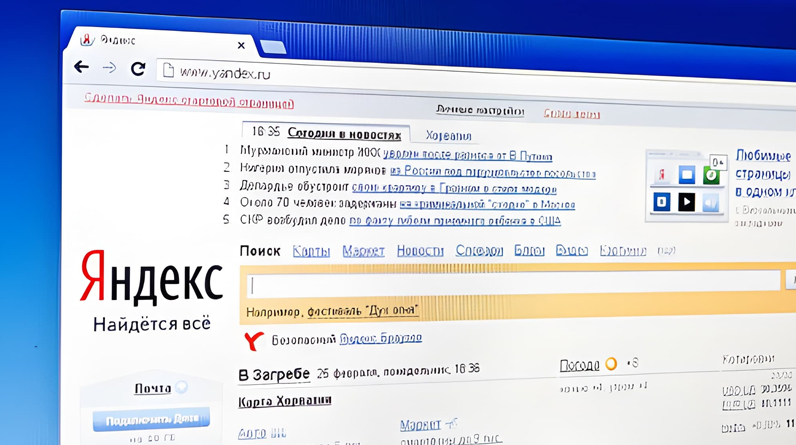
Yandex didn’t just translate Google’s approach into Russian. It fundamentally rethought how search should work for a morphologically complex language.
Russian words change form dramatically based on case, gender, number, and tense. The word “book” has at least six different forms depending on grammatical function. Early search engines treated these as separate words, producing fragmented results. Yandex’s founders, coming from a background in computational linguistics rather than pure computer science, built morphological analysis into the core algorithm from day one.
The company’s MatrixNet technology, developed in-house and later released as the open-source CatBoost library, doesn’t just match keywords. It evaluates hundreds of ranking factors simultaneously, understanding context, user intent, and regional relevance. When someone searches for “bank,” MatrixNet determines whether they mean a financial institution or a riverbank based on location data, search history, and time of day.
This technical sophistication extends to real-time search capabilities launched in 2010, years before Google refined similar features. Yandex crawls Russian-language social networks, news sites, and forums continuously, surfacing breaking information within minutes. For users seeking local news or rapidly developing stories, this responsiveness creates a tangible quality difference.
Strategic Service Expansion: Building the Moat
Yandex’s expansion into adjacent services wasn’t random diversification. Each new service addressed a specific gap in Russia’s digital infrastructure while strengthening the core search business.
Yandex.Maps and Navigation: The Local Advantage
Launched in 2004, Yandex.Maps initially seemed like a defensive move to match Google Maps. But the execution revealed deeper strategy. While Google Maps excelled at major cities, Yandex obsessively mapped every town, village, and rural road in Russia and neighboring countries. The company partnered with local governments, integrated user-submitted corrections, and hired drivers to physically survey remote areas.
Today, Yandex.Navigator is the default navigation app for millions of Russian drivers because it simply works better for local routes. It knows which streets are actually passable in winter, which shortcuts locals use, and where traffic police typically set up checkpoints. This granular local knowledge compounds over time as more users contribute data, creating a self-improving feedback loop Google can’t easily replicate.
Yandex.Taxi: Vertical Integration Meets Market Reality
When Yandex launched its ride-hailing service in 2011, Uber hadn’t yet entered Russia. By the time Uber arrived, Yandex.Taxi had already established driver networks, payment processing, and local market knowledge. The 2017 merger that combined Uber’s Russian operations with Yandex.Taxi wasn’t a defeat for Uber; it was recognition that competing against an entrenched local player with superior ecosystem integration was economically unviable.
The merger gave Yandex access to Uber’s global technology while maintaining operational control in Russia. More importantly, it added transportation data to Yandex’s existing search, maps, and payment data, further enhancing the ecosystem’s intelligence.
E-commerce and Marketplaces: Closing the Loop
Yandex.Market transformed from a price comparison site into a full marketplace that handles logistics, payments, and customer service. Unlike pure marketplaces, it leverages search data to understand what people want before they even visit the marketplace, then optimizes inventory and pricing accordingly.
This vertical integration between search intent and commerce fulfillment creates unique advantages. When someone searches for “winter tires,” Yandex knows their location, vehicle type (if they use Navigator), and purchase history. It can surface relevant products with accurate local delivery times and competitive pricing automatically.
The AI and Autonomy Push: Future-Proofing the Ecosystem

Yandex’s investments in artificial intelligence and autonomous vehicles aren’t moonshot projects disconnected from core business. They’re logical extensions of the ecosystem strategy.
Alice, Yandex’s AI assistant, integrates with every service. It controls smart home devices, orders food, calls taxis, answers questions, and manages calendar appointments—all while learning from interactions to improve recommendations across the platform. Unlike Alexa or Google Assistant, which primarily serve as hardware interfaces, Alice lives inside the entire Yandex ecosystem.
The autonomous vehicle division (spun off in 2020, then reacquired from Uber in 2021) builds on years of mapping data, traffic analysis, and real-world navigation experience. Self-driving taxis are already testing in Moscow, leveraging the same infrastructure that makes Yandex.Navigator effective for human drivers.
YandexGPT, launched in 2023, takes the integration further. It’s not a standalone chatbot but a language model woven into search, content creation, customer service, and business analytics across Yandex services. This embedded approach makes AI functionality feel natural rather than bolted-on.
The 2024 Restructuring: A New Chapter
In July 2024, Yandex underwent its most significant transformation since founding. Facing international sanctions and foreign ownership restrictions related to the Ukraine conflict, the Dutch holding company Nebius Group sold Yandex’s Russian assets to a group of Russian investors for $5.3 billion—reportedly at a significant discount to fair market value.
The new ownership structure includes Alexander Chachava (25%), Pavel Prass (15%), Lukoil (15%), Alexander Ryazanov (10%), and senior management (35%). Some observers speculate these may be intermediaries for other stakeholders, though this remains unconfirmed.
This restructuring separates Yandex’s Russian operations from its international technology development, which continues under Nebius Group focusing on AI and cloud infrastructure for global markets. For users, services continue largely unchanged, but the corporate split reflects the broader geopolitical fragmentation of the internet into regional spheres of influence.
Challenges and Controversies
Yandex’s dominance comes with significant scrutiny. Data privacy advocates question whether user information could be accessed by Russian security services. The company has publicly resisted some government data requests, including refusing to surrender encryption keys for email and cloud storage in 2019, but operates under Russian jurisdiction nonetheless.
Content moderation during politically sensitive periods has raised concerns. In February 2022, Yandex added a banner warning users that search results about Ukraine might contain inaccurate information—a move that satisfied neither critics who wanted stronger fact-checking nor government officials who preferred less transparency about information quality.
The company received 36,540 requests from Russian authorities to disclose user data in the first half of 2024, a 12% increase from the previous year. How it balances user privacy against legal compliance remains an ongoing tension.
What Yandex Reveals About the Future of Tech
Yandex’s success offers three crucial insights for anyone thinking about technology, markets, and competition:
Localization isn’t just translation. True localization means understanding cultural context, legal frameworks, payment preferences, and infrastructure realities. Yandex didn’t just make a Russian version of Google; it built services that work better for Russian realities.
Ecosystems beat features. Individual Yandex services often aren’t technically superior to Western alternatives. The power comes from how they work together, creating switching costs that compound over time. Users stay not because any single feature is irreplaceable, but because replacing the entire integrated experience is too costly.
Data sovereignty enables tech sovereignty. Countries increasingly recognize that digital infrastructure is strategic infrastructure. Yandex exists partly because Russia wanted search data, user behavior patterns, and AI development to remain under domestic control. This trend toward regional tech ecosystems will likely accelerate globally.
Practical Implications
For businesses targeting Russian markets, understanding Yandex is non-negotiable. With 60-72% search market share, ignoring Yandex optimization means missing the majority of potential customers.
Yandex.Webmaster tools offer insights comparable to Google Search Console but with Russia-specific metrics. The platform emphasizes site speed and mobile optimization heavily, reflecting infrastructure realities in regions with slower internet connections.
Russian language optimization requires attention to morphology, regional variations, and local search behavior. Keywords that work for Google may underperform on Yandex because users search differently when they trust a platform understands their language natively.
Payment integration matters more than in Western markets. Russians extensively use Yandex.Money for online transactions. E-commerce sites that integrate it see measurably higher conversion rates than those relying solely on international payment processors.
Frequently Asked Questions
Is Yandex safe to use for search and other services?
Yandex implements standard security practices including HTTPS encryption, spam filtering, and malware warnings. However, like any service under a particular jurisdiction, data is subject to that country’s laws. Users should evaluate risk based on their specific privacy needs and threat model. For routine searches and services, Yandex security is comparable to other major platforms.
Can I use Yandex services outside Russia?
Yes, most Yandex services work internationally. The search engine, translator, maps, and browser are available globally. However, some services like Yandex.Taxi operate only in specific countries. The international brand Yango offers ride-hailing in select markets including Israel, Finland, Ghana, and Ivory Coast.
How does Yandex make money?
Advertising generates the majority of revenue through Yandex.Direct, similar to Google AdWords. Additional revenue comes from ride-hailing commissions, e-commerce transactions, cloud services, and subscription products like Yandex.Plus, which bundles multiple services for a monthly fee.
What happened to Yandex in 2024?
The company underwent a major restructuring where Russian assets were sold to Russian investors for $5.3 billion, separating from the Dutch holding company Nebius Group. This split was driven by international sanctions and Russian regulations on foreign ownership. Services continue operating largely as before under new ownership.
Why does Yandex work better than Google in Russia?
Three factors: superior Russian language processing built into the core algorithm, more comprehensive local data including detailed maps and business information, and ecosystem integration that makes services work together seamlessly. Yandex also started earlier in Russia and built partnerships with local businesses before Google arrived.
The Bottom Line
Yandex represents something rare in technology: a regional player that didn’t just survive against a global giant but thrived by building something fundamentally better for its market. The ecosystem strategy that made this possible offers lessons extending far beyond Russia.
As the internet fragments into regional spheres, more companies will attempt to replicate Yandex’s approach in their markets. Success will require the same combination Yandex demonstrated: deep local knowledge, technical sophistication, and the patience to build interconnected services that create compounding advantages over time.
Whether Yandex maintains its dominance under new ownership and increasing geopolitical pressure remains uncertain. But its achievement in creating a viable alternative to the world’s most powerful technology companies provides a blueprint others will study and attempt to follow for years to come.